
Buying
Renting a thermal camera instead of buying one
Most people need a thermal camera for one afternoon, not for a lifetime. Where to hire one, what to check, and how to make the single day count.
Updated
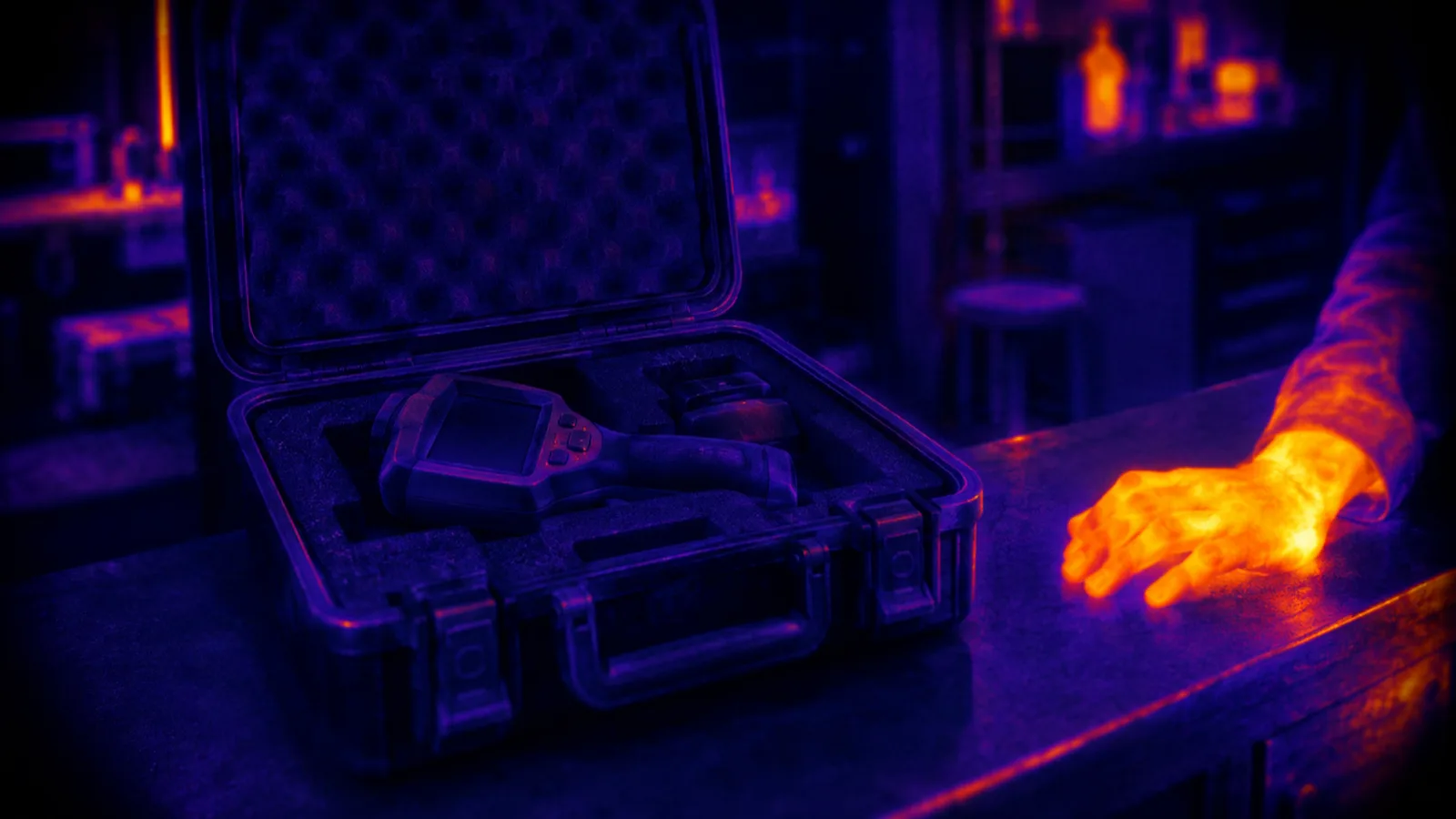
If you are asking what a thermal camera costs, the honest answer is usually “hire one”. Most of the people looking have exactly one question — why is that room cold, where is the damp coming from, is that circuit running hot — and it is a question you answer once.
Where to hire one
Tool hire shops. The obvious route, and they usually stock an entry or mid-range handheld. Day rates are a small fraction of the purchase price, with a deposit.
Builders’ merchants. Many run a hire desk alongside the trade counter, sometimes cheaper than dedicated hire shops.
Public libraries. In parts of the UK, Germany, the Netherlands and North America, libraries lend thermal cameras free as part of a tool library or an energy-advice scheme. It is worth a phone call before you pay anyone.
Energy advice services. Some local authorities and energy charities run free loan schemes over the winter, occasionally with someone who will come and do the survey with you. That is the best version of this, and the one nobody knows about.
Your electrician or surveyor. If the question is really “is this dangerous”, a trade visit with their own camera costs about what a day’s hire does and comes with someone who can read it.
What to check before you leave
- Native resolution, not “enhanced”. 160×120 is fine indoors; ask what the real figure is.
- Battery and charger in the bag. Thermal surveys happen on cold mornings and small batteries give up early.
- How it saves images. Some write to internal memory you can only reach with the maker’s software. If you want photos for a report, check before you drive home.
- Emissivity setting. If you need actual numbers rather than patterns, you will want to be able to change it.
- A quick test in the shop. Point it at your own hand. If your hand is not obviously warm, something is wrong.
Making one day count
Because the conditions matter more than the camera, plan around them:
Book for a cold spell. You want at least 10 °C between inside and outside, preferably more. A mild week wastes the hire.
Run the heating hard for several hours first. The structure needs to be warm, not just the air.
Survey before sunrise or well after dark. Sun on a wall ruins the reading for hours afterwards.
Work from the inside, room by room, looking for cold patches. Inside surfaces are not affected by sun, wind or rain.
Photograph everything, including a normal photo of each spot. In three weeks you will not remember which wall a given thermal image was.
The full method is in finding draughts, damp and missing insulation.
When buying is actually right
If you will use it more than a handful of times a year — you are a trade, a landlord with several properties, or you have caught the bug — hire costs overtake purchase quickly. A phone attachment is also a reasonable middle ground at a fraction of a standalone unit’s price.
How to choose a thermal camera covers that decision.
What hiring is not
It is not something an app replaces. A phone has no thermal sensor, so an app can only imitate the look — there is no temperature data behind the picture at all. Thermal Camera is that kind of app and says so on every page. For a real survey, spend the day rate.